November 2008


 The holiday season is now upon us.  For many, Thanksgiving is a time that friends and family gather around the dinner table for a much anticipated meal.  At this time, many will reflect upon all of the things they are thankful for and think about how to give back to those who are less fortunate.

If you would like to help families who are facing food insecurity, you can visit http://www.feedingamerica.org/.  At Feeding America’s website, enter your local zip code to find a food bank in your community.  You can donate your time, food or money online or over the phone at 1-800-711-2303, option 8.

Every dollar that is donated provides 16 meals or 20 pounds of food.

During times of economic insecurity when money is tight, the gifts are even more necessary as there are more people who don’t know where their next meal will come from.  So as we enter the season of giving, this can be an opportunity to have a dollar go a long way!

 This is Part II of a series focusing on how to build a balanced exercise program.  As mentioned previously, there are three key components that should be included in every exercise regiment:

  1. Aerobic Exercise
  2. Strength/ Resistance Training
  3. Flexibility/ Stretching

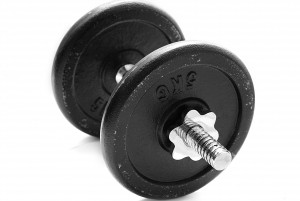
Today, I will focus on information about strength/weight training, which is the final key component of a balanced program: 

Strength Training

We all know that weight training helps to build and strengthen muscles, but many people do not know that it also provides the following benefits:

  • Increases bone density and improves balance, reducing the risk of osteoporosis and fractures
  • Increases Metabolism
  • Helps to maintain good posture
  • Reduces back pain and injuries, and reduces pain associated with osteoarthritis
  • It is believed to improve the way the body processes sugar, reducing the risk of developing type 2 diabetes
  • Improves cardiovascular health by reducing blood pressure and improving cholesterol levels
  • Makes daily tasks easier (i.e. walking up stairs, carrying groceries)

All too often women do not weight train because they fear that they will “bulk up”, the reality is that most women do not have the genetic make up to build large-bulky muscles.  Body builders spend hours each week doing a resistance training program designed to increase muscle mass.  In reality, most weight training programs will just make the muscles appear more toned and improve body composition.

Tips to create a balanced routine:

1.      Work all major muscle groups to prevent strength imbalances and injuries (i.e. back, chest, biceps, triceps, abdominals, hamstrings, quadriceps). 

2.      Beginners should start with one set of 8-10 reps and build up to 3 sets of 8-10 reps. At the end of each set, your muscles should feel fatigued.  If an exercise starts to feel too easy, try doing 12 repetitions.  When you can do 12 reps comfortably, you should increase your weight by 5%. 

3.      Aim to work each muscle 2-3 times per week, allowing 24-48 hours of rest between workouts.  This gives your muscles time to recover and provides faster improvements that a daily strength training routine. 

4.      Be patient.  It takes time to see improvements in your body, so don’t expect to see a difference after 1 or 2 workouts.  However, you will quickly notice improvements in strength, so focus on that and know that the improved body composition will follow!

5.      Include variety.  By including a combination of free weights and machines, you will be able to take advantage of the unique benefits that each one has to offer.  Varying your routine will also help to prevent boredom and improve overall strength gains.

6.      Warming up for 5 minutes prior to strength training helps to improve circulation and cooling down helps to decrease blood flow.  Both of these will help to reduce the risk of injury. 

7.      Don’t forget to stretch after strength training to decrease soreness and maintain flexibility.

8.      Remember to consult with your doctor before starting any exercise program.

When first starting a weight training routine, it can be helpful to work with a personal trainer.  A trainer can help you develop a balanced routine and can teach you the proper form for each exercise.  Many gyms offer one free personal training session along with your membership, and some even offer a free session once a year.  Take advantage of these sessions so you can get the most out of your workout routine. 

If you don’t belong to a gym, weight training can be done in your own home with minimal equipment.  Resistance bands or a few free weights are often all you need to get a full body workout.  Some personal trainers will even go into your home and develop a routine for you using the equipment that you already own.

Now that you learned about the three key components of a balanced exercise routine, it is a good time to take a look at your workout routine to make sure it contains aerobic exercise, strength training and stretching.  This combination will help maximize the benefits you get from your workouts!

Hydration and Pre Competition Meals Marathon

Get your own at Scribd or explore others: Health

To get the maximum benefits out of your workouts and to reduce the risk of injury, it is very important to have a balanced exercise program.  There are three key components that should be included in every exercise regiment:

  1. Aerobic Exercise
  2. Strength/ Resistance Training
  3. Flexibility/ Stretching

For general health benefits, approximately 60% of exercise time should be spent on aerobic exercise, 30% on strength training and 10% on flexibility.  Last week I wrote about some of the benefits of stretching, today I will focus on aerobic exercise and you can stay tuned for a post on the benefits of strength training.

Aerobic Exercise

The word aerobic means “with oxygen”.  Therefore, aerobic exercises are defined as exercises that require oxygen in the body.  Some examples are walking, jogging, biking, swimming and elliptical training.  Aerobic exercises are beneficial because they:

  • Help to achieve/maintain a healthy weight by burning calories
  • Tone muscles and build strength
  • Improve cardiovascular health by strengthening the heart muscle
  • Decreases blood pressure and blood sugars
  • Improve respiration and oxygen delivery throughout the body
  • Aid in stress management and help with depression

Generally, aerobic exercises are done at moderate intensities for a sustained period of time.  In order to get the maximum cardiovascular benefits from your workouts, you will want to make sure that your aerobic exercises last at least 20 minutes and that you are within the recommended intensity range.

Two well accepted ways to determine if you are working out at the appropriate intensity level are to monitor your heart rate or to rate perceived exhaustion (RPE).  If you like numbers, you can determine your target heart rate zone using the following method:

  1. Determine your maximal heart rate by subtracting your age from the number 220.
    • Example: If you are 40 years old, your maximal heart rate is ~180 beats per minute (bpm).
  2. Your target heart rate zone is the number of beats per minute at which your heart should be beating during exercise.  Your target heart zone should be between 50-80% of your maximal heart rate. 
    • Example: If your maximal heart rate is 180 bpm, then your target heart rate zone is 90-144 bpm.
  3. When first starting an exercise program, you should aim to be at the low end of this range.  As you become more fit, you should aim to get up to the higher end of this range.  However, it is always important to always listen to your body!  If you feel like you are working too hard or you can’t catch your breath, slow down.  These guidelines were made for healthy individuals, so ask your doctor how hard you should be working out if you have heart disease or are taking medications.

For those who don’t love numbers or don’t want to stop to measure heart rate during exercise, a much simpler method to monitor exercise intensity is to rate perceived exertion (RPE).  The RPE scale provides a way to gage how hard you are working and ensure that you’re working out at a comfortable level.

When measuring RPE you will want to pay attention to sensory input from muscles, joints, breathing rate and heart rate.  Then use a scale to rate these feelings during exercise.  The Borg Scale is a 20 point scale that is often used to rate perceived exhaustion, but the following is a more user-friendly scale from the American Council on Exercise: 

Rating How hard you are working? Exercise Equivalent
0 Nothing at all Lying in bed
1 Very weak
2 Weak
3 Moderate Walking at a moderate pace
4 Somewhat Strong
5 Strong
6
7 Very Strong
8
9
10 Couldn’t work harder Sprinting up a hill

It is recommended that most people remain in the 3-5 range when exercising. 

Regardless of whether you decide to monitor your heart rate or use the RPE scale, take time to make these assessments throughout your workout.  This will help to make your workouts more enjoyable and to help maximize your cardiovascular benefits. 

 There is good news for all of you health-conscious people living in Philadelphia.  A law just passed last week requiring chain restaurants (those with more than 15 stores nationwide) to post calorie counts on menus and menu boards.  But move over New York City, Philadelphia’s new law is the most stringent in the country.  In addition to calories, the new law requires that printed menus list sodium, carbohydrate, trans and saturated fat content also.

 However, don’t expect to see these changes anytime soon because the new law will only go into effect January 1, 2010.  This will give restaurants time to prepare for the changes.  (Hopefully, part of this preparation will be coming up with new menu items that are lower in fat, calories and sodium!)

According to an article in Nation’s Restaurant News, the Pennsylvania Restaurant Association (PRA) has “asked for a meeting with Philadelphia mayor Michael Nutter in hopes of convincing him to veto the law.”  The PRA recognizes that a veto is unlikely and could be overridden by the council since the bill was passed with a 12-5 vote.  Regardless, they will probably try for a veto or an amendment to the bill.  So, if you would like to see this law go into effect unchanged, it could be a good idea to let your local member of congress know that you support the law.

The Center for Science in the Public Interest makes it easy to take action if you support this law or want a similar law to pass in your area.

Resource: Philadelphia Gives Menu Labeling a Twist.  http://www.nrn.com/breakingNews.aspx?id=359940&menu_id=1368  Nation’s Restaruant News.  November 6, 2009.

Did you ever wake up the day after starting an exercise program and feel so sore that your muscles ach with each step you take?  Whether you are new to working out or someone who likes to change up your exercise routine from time to time, I’m sure this sounds familiar.  Delayed onset muscle soreness (DOMS) usually occurs 12-48 hours after exercise and can last for up to 7 days.  This unpleasant pain can often cause people to stop exercising, but don’t let it stop you.  Instead, try the following tips to help minimize these symptoms.

  1. Don’t forget to stretch.  Stretching at the end of a workout is one of the best ways to reduce DOMS and increase flexibility.  Use the following principles to make sure you are stretching properly:
    1. Never stretch cold muscles.  Make sure you warm up your muscles for at least 5 minutes before stretching.  Stretching after exercise is more effective at reducing the risk of injuries and muscle soreness than exercising before exercise.
    2. Move slowly into your stretches, and hold each stretch for 20-30 seconds.  You do not want to bounce or push your muscle too far.
    3. Repeat each stretch at least 3 times.  It is ideal to spend at least 30 minutes a week on flexibility training, but even 5 minutes after a workout can help.
    4. Remember to breathe while you stretch.
  2. Warm up before exercise.  Spend the first 5 minutes of workout building up your heart rate gradually and giving your muscles a chance to get warm.  This helps reduce your risk of injury and helps to minimize DOMS. 
  3. Gradually add onto your exercise routine.  There are three ways to build up your exercise routine, and it is called the FIT principle.  You can add on Frequency, Intensity or Time.  Try building up one at a time, NOT all three.
    1. Build Frequency by adding in an extra day or two of workouts.  For example, if you exercise 2 days a week, try adding in a third day each week.
    2. Intensity is how vigorous your workout is.  For example, if you walk usually walk a mile in 20 minutes; try to up your intensity so you can walk 1.1 miles in the same amount of time.  As a general rule of thumb, you will only want to increase intensity by 10% per week. 
    3. If you want to build up the amount of time you spend exercising, add on 5-10 minutes at a time.  Instead of a 20 minute bike ride, try going for 25 minutes.
  4. Don’t forget to take a day off from exercise!  Muscles need time to recover and rebuild, so it is always good to allow for a recovery day each week.  This does not mean you cannot do any activities on this day, but you will want to keep it light.  Going for a leisurely walk in the park or doing some stretching will still give your muscles the break they need to repair themselves.

 Whether or not you are an athlete, maintaining muscle mass is important for strength, keeping your metabolism up and maintaining physical independence later in life.  Protein helps to build and maintain muscle mass, so it is important to ensure that your meeting your protein needs with your diet.  However, new research done by Susan Hewlings, a registered dietitian who specializes in protein metabolism, found the timing of the protein intake is just as important as the total amount of protein.

Many Americans skip breakfast or they are not including a high quality protein source in the morning.  Lunch often includes a little more protein (if you are able to fit it into your schedule) and then we pack the protein in at dinner.  When we go long periods of time without protein during the day, our body starts to pull amino acids (the building blocks of protein) from our muscles so that our organs and other tissues can keep functioning properly.  In order to prevent this muscle loss, it is important that you do not skip meals and include a protein source at each meal and at snacks.

High quality protein sources include meats, poultry, fish, eggs and dairy products.  If you have vegetarian preferences, nuts, peanut butter, soy products, beans and legumes are also good sources of protein.  The following chart lists the protein content of some high protein foods:

Type of Food Protein grams Per serving What is a serving?
Meat ~7gm 1oz of beef, chicken, fish, ham, shellfish, turkey, etc.
Egg 6gm 1 egg
Milk and Yogurt 8gm 8 oz Milk, 8 oz Yogurt
Cheese 7gm 1 oz Cheese
Beans 8gm ½ Cup Beans
Nuts 2-10gm 1 oz Nuts (varieties vary greatly)
Seeds 5gm 1 oz Seeds

For heart health, try to choose low-fat dairy products, fish, lean meats and cut all visible fat from meats.  Some good choices include turkey or chicken without the skin, fish, low-fat or fat-free cheese, yogurt, cottage cheese and milk.  Look for the words “round” or “loin” when choosing meats.

So how much protein do you need?  Protein needs depend on activity levels.  The following chart can give you some guidelines:

Type of Activity Recommendation
Non-Athletes and Recreational Athletes who workout at low intensities (i.e. walking) 0.36 gm/pound/day
Endurance Athletes 0.55-0.64 gm/pound/day
Strength Training 0.73-0.77 gm/pound/day

It can be easy to meet the recommended amount of protein with the diet, and most American’s get more than enough protein, so protein supplements are not necessary.  Rather, just think about whether or not you are spreading your protein intake throughout the day.  It can be quite simple.  For example, try having cereal with milk, eggs and toast, a fruit and yogurt parfait, or peanut butter on your toast for breakfast.  At snacks, it can be as easy as having yogurt or peanut butter with your fruit.

Resource: O’Neil C.  Balanced Diet Includes Protein Portions at Each Meal.  http://www.ajc.com/services/content/printedition/2008/11/05/eatingout.html.  November 5th, 2008.

If you’re looking for ways to reduce your risk of Alzheimer’s disease, you may want to set down the crossword puzzles and pick up your sneakers.  In a study published in the Journal of American Medical Association (JAMA), it was found that exercise can reduce the risk of mental decline to a greater extent than doing brain activities (i.e. crossword puzzles) and offers more benefits than some medications designed to improve cognitive function.

Researchers found that “moderate-intensity exercise improved memory in older adults who presented with prior cognitive impairment”.  In fact, compared to customary care for memory problems, those who participated in 20 minutes of daily physical activity for six months had “better scores on the Alzheimer’s Disease Assessment Scale-Cognitive Subscale (ADAS-Cog), improved their delayed recall and scored lower on the clinical Dementia Rating than non-exercises”.

The study also found that when people exercise on a regular basis for 6 months they can maintain the cognitive benefits for up to a year after stopping the exercise.  So get up now and start moving before you forget to do it!

Resources:

Marino C.  Remember to Exercise or Exercise to Remember. FitBits Exercise ETC’s Review of Exercise Related Research. September 15, 2008.

Lautenschlager, N.T., et al (2008) Effect of Physical Activity on Cognitive Function in Older Adults at Risk for Alzheimer Disease: A Randomized Trial. JAMA. 300(9):1027-1037.

Preidt, Robert. (2008) Exercise May Help Prevent Age-Related Memory Loss. Reuters. September 2.